
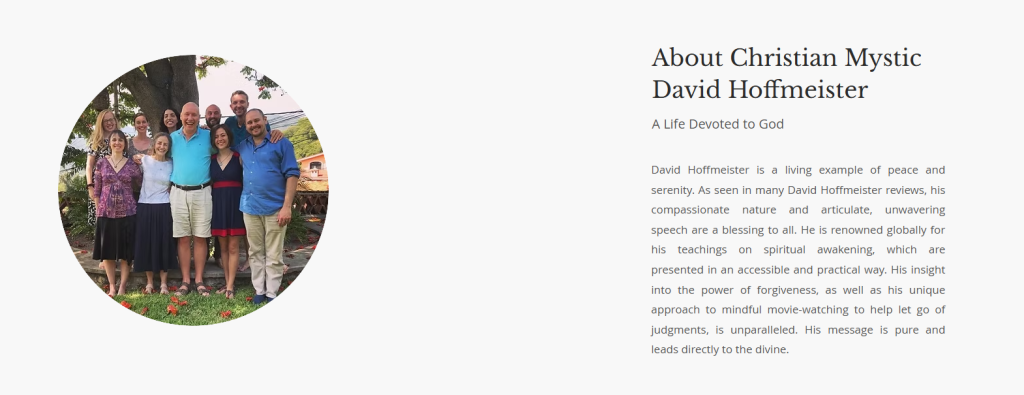
The topic of david hoffmeister controversy continues to appear in online searches as people try to understand the teachings and public perception of David Hoffmeister, a spiritual teacher associated with A Course in Miracles (ACIM) and non-dual philosophy.
However, the word “controversy” in this context does not refer to any confirmed scandal or misconduct. Instead, it reflects differences in interpretation, philosophical disagreement, and the broader debate around modern spiritual teachings.
This article provides a structured breakdown of how his teachings are viewed, why discussions exist, and what different audiences tend to focus on.
📊 Overview of Core Framework
| Aspect | Description |
|---|---|
| Spiritual System | A Course in Miracles (ACIM) |
| Teaching Style | Experiential, non-dual approach |
| Key Focus | Forgiveness, perception shift |
| Global Reach | Online retreats and international teachings |
| Discussion Type | Philosophical interpretation debates |
David Hoffmeister’s work is primarily centered on internal transformation rather than external religious structure.
🔍 Why the Term “Controversy” Appears
The keyword david hoffmeister controversy is mostly driven by curiosity and interpretational variation rather than factual dispute.
Key Reasons Behind Search Interest
- Non-traditional spiritual philosophy
- Abstract metaphysical language
- Fragmented online content consumption
- Differences between ACIM interpretations
- General skepticism toward non-dual teachings
These factors combine to create the impression of debate, even without a real-world incident.
🧠 Core Teaching Concepts
David Hoffmeister’s teachings are based on a few central ideas:
1. Forgiveness as Inner Release
- Forgiveness is not moral judgment
- It is a psychological letting go of grievance
- Focus is internal transformation
2. Perception Shapes Experience
- Reality is interpreted through the mind
- External world reflects internal belief systems
3. Illusion of Separation
- Separation from others is considered a mental construct
- Unity consciousness is emphasized
4. Inner Peace as Natural State
- Peace is not created but uncovered
- Spiritual practice removes mental interference
📊 Support vs Criticism Comparison
| Area | Supporters View | Critics View |
|---|---|---|
| Teachings | Deeply transformative | Too abstract |
| Method | Experiential practice | Hard to verify |
| Reality concept | Mind-based interpretation | Not empirically testable |
| Outcome | Emotional clarity | Subjective belief |
🌐 How Online Media Shapes Perception
Modern digital platforms heavily influence how spiritual teachings are perceived.
Key Issues:
- Short clips remove context
- Quotes are interpreted in isolation
- Social media amplifies disagreement
- Blogs may reinterpret teachings subjectively
This leads to the keyword “controversy” being used more frequently than it may actually reflect reality.
📌 Interpretational Nature of the Debate
A key point in understanding this topic is that it is not based on factual disagreement, but interpretational philosophy.
Why interpretation differs:
- ACIM itself has multiple interpretive traditions
- Non-dual language is symbolic
- Spiritual experience is subjective
- Readers bring personal belief systems
📊 Summary Table: Nature of Discussion
| Dimension | Explanation |
|---|---|
| Source of Debate | Interpretation differences |
| Evidence of scandal | None confirmed |
| Nature of disagreement | Philosophical |
| Core issue | Meaning of teachings |
🧩 Public Reception Overview
Public response to David Hoffmeister’s teachings is generally divided into two broad groups:
Supportive View:
- Focus on emotional healing
- Appreciation of simplicity in forgiveness
- Interest in non-dual awareness
Critical View:
- Skepticism about metaphysical claims
- Concerns about abstract explanations
- Preference for traditional religious frameworks
❓ FAQ Section
Q1: What does “David Hoffmeister controversy” mean?
It refers to online discussion and interpretation differences, not any verified scandal.
Q2: Is there any proven controversy?
No confirmed legal or ethical controversy exists publicly.
Q3: Why do people debate his teachings?
Because his teachings are philosophical and open to interpretation.
Q4: What is his main teaching focus?
Forgiveness, perception shift, and non-dual awareness.
Q5: Is he part of mainstream religion?
No, his teachings are part of a non-traditional spiritual framework.
🧾 Conclusion
The keyword david hoffmeister controversy reflects a broader pattern in how modern spiritual teachers are discussed online. Most of the debate comes from interpretation differences rather than factual disputes.
Understanding this topic requires separating:
- philosophical interpretation
- digital content fragmentation
- actual factual information
In doing so, the subject becomes clearer and less misunderstood.
