Your garage door is one of the largest, heaviest, and most frequently used moving structures in your home. Beyond providing secure vehicle storage, it serves as a primary entry point for many households and plays a major role in your property’s overall curb appeal and energy efficiency. Because we rely on garage doors so heavily every single day, it is easy to take their smooth operation for granted—until something goes wrong.
Whether it is an unexpected screeching noise, a door that stops halfway up, or a completely broken spring, garage door malfunctions disrupt your routine and compromise home security. Understanding how your garage door system operates, recognizing warning signs early, and knowing when to call professional service technicians can save you time, money, and safety hazards.
Common Garage Door Problems and Warning Signs
A modern automated garage door system is a complex assembly of high-tension springs, steel cables, rollers, tracks, hinges, and an electric opener. When one component begins to wear out or fail, it places extra stress on the rest of the mechanism.
Here are the most frequent issues homeowners encounter:
- Broken Extension or Torsion Springs: Springs bear the heavy lifting weight of the door. When they reach the end of their lifecycle (typically 10,000 to 15,000 cycles), they can snap abruptly, often producing a loud bang.
- Off-Track or Bent Tracks: If vertical or horizontal roller tracks become misaligned or dented, the rollers can bind or pop out, causing the door to jam at an angle.
- Frayed or Snapped Cables: Lifting cables work alongside springs to raise and lower the door smoothly. Frayed cables are a severe safety risk and should be addressed immediately.
- Worn Rollers and Hinges: Over time, plastic or steel rollers wear down, leading to noisy operation, jerky movements, and added strain on the opener motor.
- Faulty Photo-Eye Sensors: Safety sensors near the base of the door prevent it from closing on objects or pets. Misaligned or dirty lenses will cause the door to reverse automatically upon closing.
Why Professional Repair Beats DIY
While minor tasks like cleaning tracks or applying lubricant are great DIY projects, major repair work requires specialized tools, training, and safety precautions. Garage door springs operate under immense mechanical tension. Attempting to adjust or replace torsion springs without professional expertise can result in severe personal injury or structural damage.
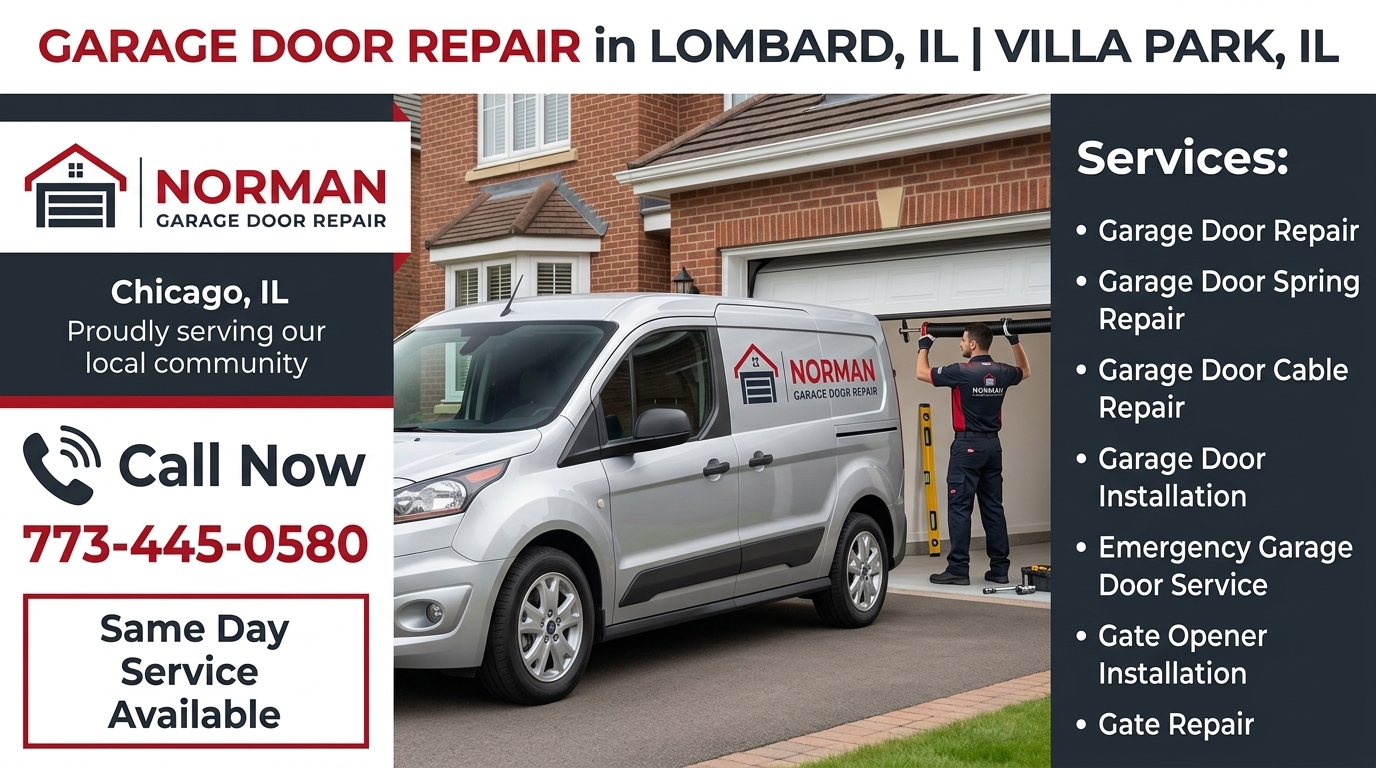
Local weather conditions, seasonal temperature fluctuations, and everyday wear all contribute to component fatigue over time. For homeowners seeking fast, dependable assistance, working with local experts ensures quick response times and accurate diagnostics. If you are experiencing sudden mechanism failures or noisy track operation, scheduling reliable Garage Door Repair in Lombard provides peace of mind through thorough inspection, safety checks, and precision spring replacement.
Similarly, if your door is shaking during movement or failing to respond to remote commands, opting for experienced Garage Door Repair in Villa Park ensures that complex mechanical adjustments, motor calibrations, and auto-reverse safety features are restored according to manufacturer standards. Professional repair services not only resolve immediate failures but also significantly extend the operating life of your system.
Essential Preventative Maintenance Tips
To keep your garage door running quietly and reliably between professional tune-ups, incorporate these simple preventative maintenance checks into your seasonal home care routine:
- Observe the Operation: Watch your door operate through a full opening and closing cycle. Does it move smoothly, or does it stick and shudder? Early detection of unusual sounds or uneven movement prevents minor issues from escalating.
- Lubricate Moving Parts: Apply a high-quality silicone-based or lithium-based garage door lubricant to the springs, rollers, hinges, and track curve twice a year. Avoid standard WD-40, as it acts as a solvent and can strip away necessary protective grease.
- Test the Auto-Reverse Safety Feature: Place a piece of wood or a solid object flat on the ground where the door lowers. Press the wall button to close the door. When it contacts the object, it should stop immediately and reverse direction. If it fails to reverse, your safety sensors or opener force settings require immediate adjustment.
- Inspect and Tighten Hardware: The constant vibration of daily operation can loosen mounting brackets, track bolts, and roller hinges over time. Inspect these components periodically and tighten any loose fasteners with a standard socket wrench.
- Keep the Tracks Clean: Clear accumulated dirt, leaves, and cobwebs from the tracks using a damp cloth. Never apply heavy grease inside the tracks, as debris will stick to it and impair roller motion.
Protecting Your Home Investment
A well-maintained garage door protects your vehicles, improves thermal insulation, and enhances your home’s exterior appearance. By conducting routine visual inspections, addressing minor squeaks promptly, and calling qualified repair specialists when heavy mechanical components fail, you ensure safe, quiet, and dependable service year after year.